Apré mò | About
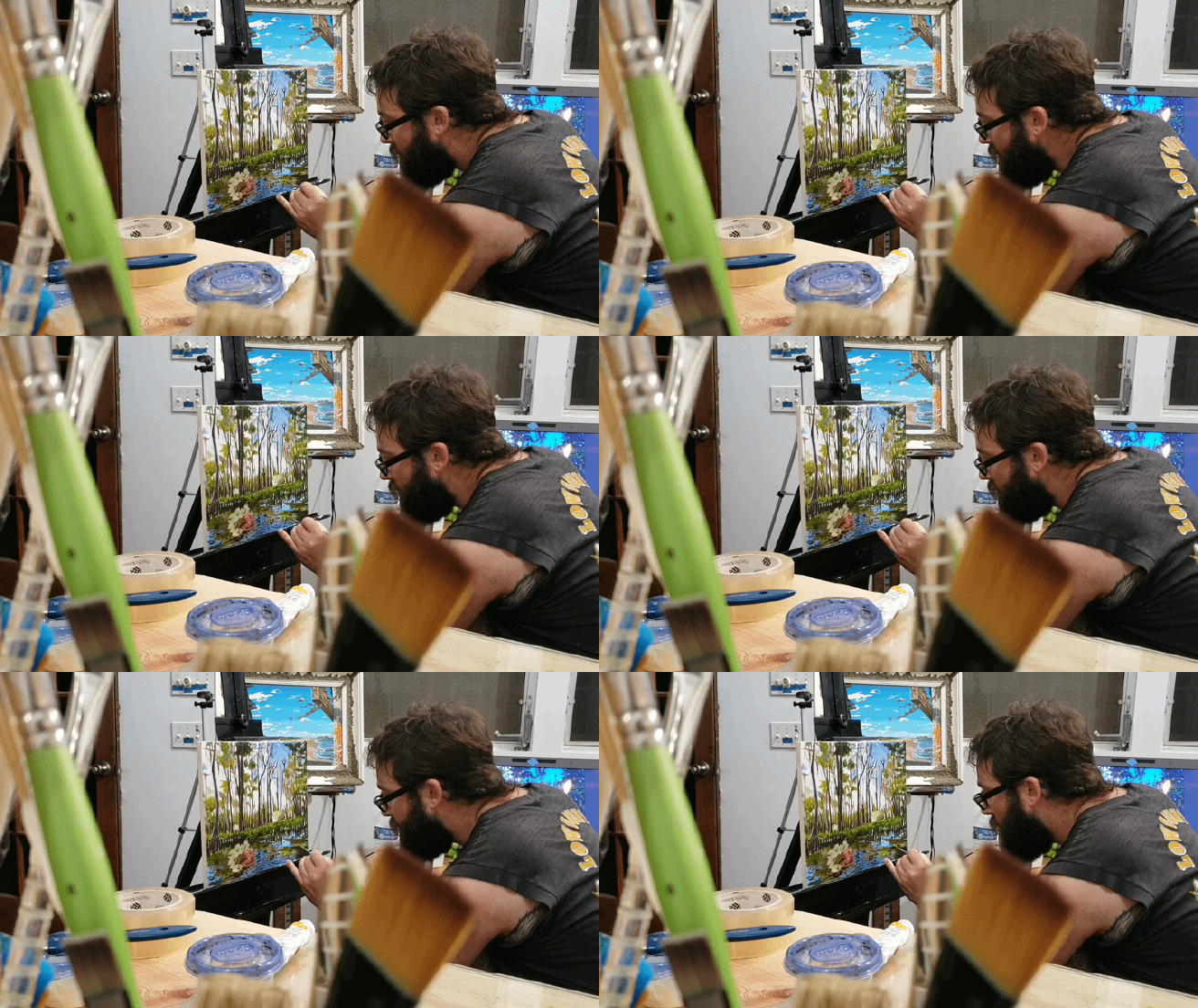
Ê pinti Le Marécage de Maurepas ê shanté "La Valse du Bayou Têche" par Morris & Dexter Ardoin koté Studjo dan Bwa-la, lotonn 2018.
Après peigner Le Marécage de Maurepas en chantant "La Valse de bayou Têche" par Morris & Dexter Ardoin au Studio dans le bois, l'automne 2018.
Painting Le Marécage de Maurepas and singing the "Bayou Têche Waltz" by Morris & Dexter Ardoin at A Studio in the Woods, autumn 2018.
Jonathan “feral opossum” Mayers was born in the area where the Houma and Bayougoula tribes once divided their hunting grounds by the istrouma, le batôn rouge (the red stick). He grew up under the white oaks close to the Amite River, a place that welcomed discovery and exploration. On weekends Mayers would take trips to the family camp on Belle River in Pierre Part, LA or to visit family in Lafayette, Sunset and Opelousas, LA. He formed a connection with his environment by plunging into lakes to catch turtles, creating mud structures, building wooden bridges, and imagining himself as a monster to then smash “skyscrapers” in mudbug cities. While attending LSU, his artwork took on cartoon-like imagery, boasting vivid colors reminiscent of video games and comic books. His passion for reconnecting with his heritage and reclaiming his family’s culture, which was lost two generations earlier due to the Americanization of Louisiana, took hold and helped to spawn Green Guédry, a character which uses one of Mayers’ ancestral surnames. The character acts as a metaphor for benevolent, yet resilient people of Acadian and Créole descent. After living and working in New Orleans for 6 years and feeling seemingly disconnected from the land, Mayers turned to creating images of mythological monsters that now exist in his home-inspired marshes and swamps. He spends much of his time visiting with artist and musician friends in Louisiana, listening to local bands from the area, steadily learning language and traditions of his culture, and traveling to environmentally sensitive areas to collect mud and sediment from these places to include in his artwork.